Berlin's Street Art Scene: An Urban Exploration Guide
 This photo was taken by Max Kladitin on Pexels.
Welcome to the vibrant underbelly of Germany's capital, where concrete walls tell stories far more compelling than any museum exhibit. As a local guide who has walked every cobblestone and alleyway in Berlin for years, I can assure you that the city's street art scene is not merely decoration—it is a living, breathing testament to freedom, history, and unbridled creativity. From the iconic murals that once stood along the Iron Curtain to the ever-evolving graffiti masterpieces hidden in forgotten courtyards, Berlin offers an open-air gallery that changes with every season. In this guide, we will journey through the monumental East Side Gallery, dive deep into the rebellious heart of Kreuzberg and Friedrichshain, and help you decide whether to follow a guided tour or embark on your own solo expedition to uncover the city's most stunning hidden murals. Get ready to see Berlin through a new lens.
The East Side Gallery: A Monumental Open-Air Canvas
Stretching along a 1.3-kilometer section of the former Berlin Wall in Friedrichshain, the East Side Gallery stands as the world's largest open-air gallery and a powerful testament to freedom and unity. Following the fall of the Wall in 1989, over 100 artists from around the globe were invited to transform the concrete monolith into a vibrant canvas, creating iconic masterpieces like Dmitri Vrubel's "The Fraternal Kiss" that capture the euphoria of the era. Today, this monumental stretch serves not only as a historical landmark but also as a living museum where visitors can walk among brushstrokes that celebrate peace, hope, and the enduring human spirit against a backdrop of urban renewal.
Exploring the East Side Gallery offers a unique blend of art history and contemporary street culture, making it an essential stop for any traveler diving into Berlin's dynamic scene. While the original murals have faced challenges from weathering and vandalism, ongoing restoration efforts ensure that these historic works remain visible, often surrounded by new layers of ever-evolving graffiti that reflect current social issues. Whether you are sketching your own tribute or simply admiring the colorful juxtaposition of past and present, the gallery provides an immersive experience that encapsulates Berlin's resilient character and its role as a global hub for artistic expression.
 This photo was taken by Loic Van Montagu on Pexels.
Kreuzberg & Friedrichshain: The Heart of Berlin's Graffiti Culture
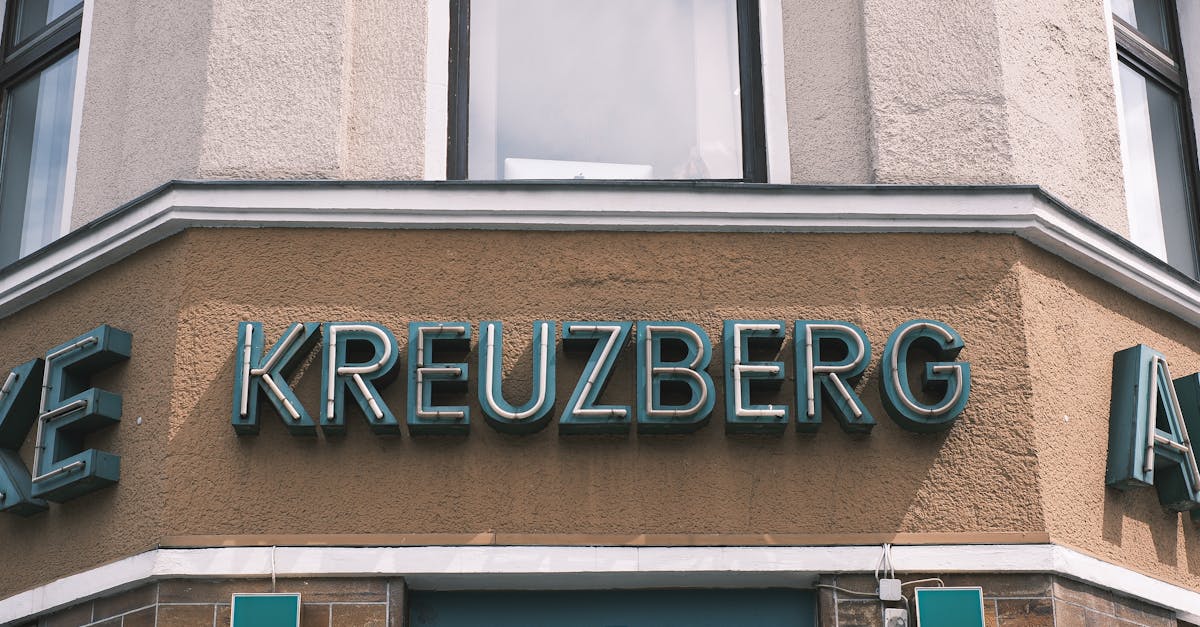
At the epicenter of Berlin's rebellious spirit lies the dynamic duo of Kreuzberg and Friedrichshain, neighborhoods where concrete walls serve as ever-changing canvases for some of the world's most renowned street artists. Here, the East Side Gallery stands as a monumental testament to history and expression, its preserved sections of the Berlin Wall adorned with vibrant murals that have evolved over decades into an open-air gallery. Wander through the narrow streets of Bergmannkiez or along the Spree riverbanks in Friedrichshain, and you will discover that no two days bring the same visual feast; local collectives and international stars alike constantly repaint facades, turning entire city blocks into immersive art installations that challenge perceptions and celebrate urban freedom.
Beyond the famous landmarks, the true essence of this scene is found in the hidden courtyards (Hinterhöfe) and abandoned industrial zones that invite curious explorers to delve deeper. These areas often host legal graffiti projects and underground festivals, fostering a community where creativity thrives without censorship. Whether you are tracing the legacy of pioneers like Blu and Alias or snapping photos of spontaneous pieces emerging overnight, a visit to these districts offers more than just sightseeing; it provides a raw, unfiltered glimpse into Berlin's cultural identity, proving that in this city, the street is not merely a place to walk, but a living, breathing dialogue between the artist and the public.
 This photo was taken by Carsten Busch on Pexels.
Guided Tours vs. Solo Exploration: Finding Hidden Murals
 This photo was taken by Bengz S on Pexels.