Culinary Delights: From Sausages to Pretzels
 This photo was taken by Martii Tolentino on Pexels.
Welcome to the heart of German gastronomy, where every bite tells a story of tradition and regional pride. As your guide through this vibrant culinary landscape, I invite you to embark on a flavorful journey that goes far beyond simple sustenance. From the smoky, grilled perfection of our beloved bratwurst to the golden, salt-crusted allure of a freshly baked Brezel, we will explore the dishes that have become icons of German culture. But the adventure doesn't stop at savory staples; prepare your palate for a delightful descent into sweet treats and unique regional specialties that define the diverse tastes of our country. Let us savor the essence of Germany, one delicious dish at a time.
The Iconic Bratwurst: A Journey Through Germany's Favorite Sausages
When exploring Germany's vibrant food scene, few culinary icons capture the nation's soul quite like the bratwurst. This beloved sausage, available in over 40 regional varieties from Nuremberg's tiny "Rostbratwurst" to Thuringia's robust spiced version, offers a journey through local history and tradition. Traditionally grilled over charcoal or pan-fried until the casing snaps with a satisfying crunch, a perfect bratwurst is often served on a fresh roll (Brötchen) with mustard, accompanied by sauerkraut or creamy potato salad. Whether enjoyed at a bustling Oktoberfest tent in Munich or a quiet roadside stand in the Black Forest, each bite tells a story of centuries-old butchery techniques and regional pride.
The experience of eating bratwurst extends far beyond mere sustenance; it is a communal ritual that brings people together under the open sky. In cities like Berlin and Leipzig, you will find specialized stands where locals gather after work, sharing stories while savoring their warm sausages dipped in various sauces ranging from classic yellow mustard to spicy horseradish. As you wander through German streets, the aroma of grilling meat serves as an irresistible invitation to pause and partake in this national treasure, making every meal an authentic taste of German culture that pairs perfectly with the country's famous pretzels and frosty beers.
 This photo was taken by Erik Mclean on Pexels.
Soft, Salty, and Perfect: The Art of the German Brezel
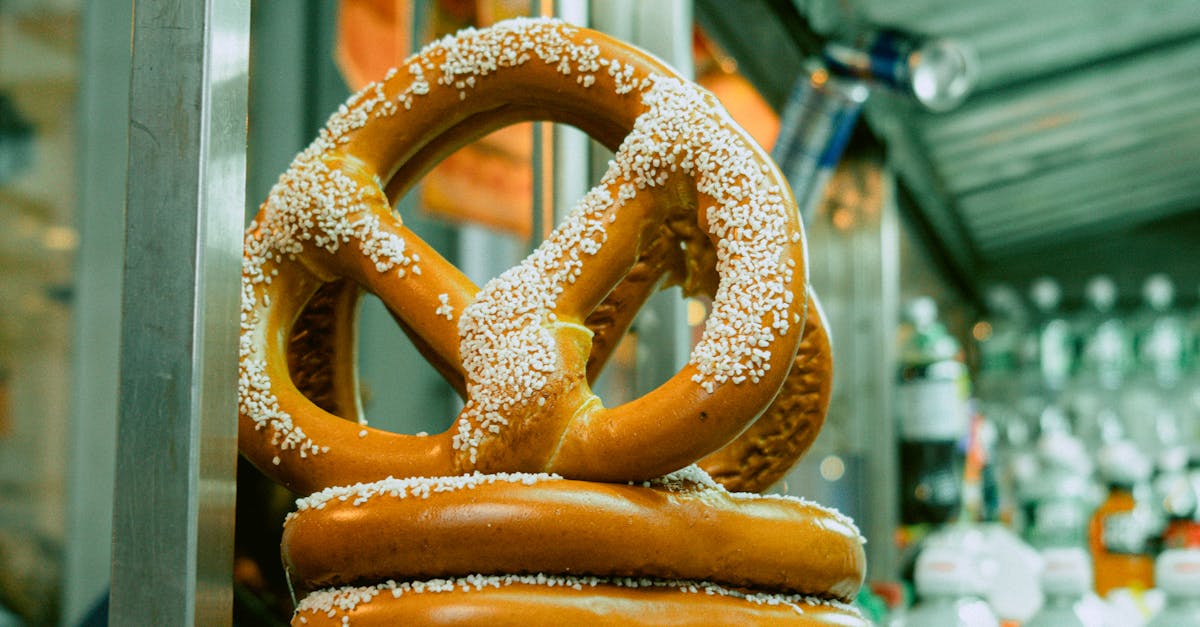
There is perhaps no symbol of German baking culture quite as iconic or universally beloved as the Brezel, that golden-brown knot of dough whose crust offers a satisfyingly crisp resistance before yielding to a soft, airy interior. This traditional treat owes its distinctive deep brown hue and unique flavor profile to the ancient technique of briefly dipping the shaped dough in an alkaline solution before baking, a process that triggers the Maillard reaction and creates those signature shiny cracks. Whether enjoyed warm from a bakery oven in Munich's Viktualienmarkt or purchased fresh at a roadside stand in Bavaria, the Brezel is more than just a snack; it is a culinary ritual often served with sweet mustard for breakfast or paired with a crisp Weissbier in the evening, embodying the perfect balance of salty and sweet that defines German comfort food.
The artistry behind the Brezel extends beyond its taste, representing centuries of tradition where the shape itself tells a story, with many believing the three loops symbolize the Holy Trinity or simply represent arms crossed in prayer by bakers who were once forbidden to make bread during Lent. As you wander through Germany's historic cities, you will find that while the basic recipe remains consistent, regional variations abound, from the larger, softer versions found in Franconia to the smaller, crispier twists popular in Berlin. For any traveler seeking an authentic taste of local life, stopping to share a fresh Brezel with locals in a bustling beer garden offers not just a delicious bite, but a genuine connection to the heart of German hospitality and culinary heritage.
 This photo was taken by Caique Araujo on Pexels.
Beyond the Main Course: Sweet Treats and Regional Specialties
While the savory flavors of German cuisine are legendary, the country's dessert culture offers an equally delightful journey through its diverse regions. In Bavaria, you simply cannot leave without indulging in a warm Brezel dipped in sweet vanilla sauce or trying the famous Apfelstrudel, often served with a scoop of creamy vanilla custard. Moving north to Hamburg, the culinary landscape shifts to include the rich, dark chocolate layers of the classic Schwarzwälder Kirschtorte (Black Forest Cake), which is said to have originated in the nearby Black Forest but has become a staple across the nation. These sweets are not just treats; they are historical narratives on a plate, reflecting centuries of tradition and local ingredients that define each area's unique identity.
Beyond the well-known pastries, Germany boasts a treasure trove of regional specialties that deserve a spot on every traveler's itinerary. In the south, Kaiserschmarrn, a fluffy shredded pancake caramelized with sugar and raisins, is traditionally paired with plum compote for a comforting finish to any meal. Meanwhile, in the Rhineland, locals celebrate their heritage with Rheinkaviar, a sweet cream cheese spread often enjoyed on fresh bread, and in Saxony, the delicate Leipziger Lerche pastry offers a buttery almond filling wrapped in flaky dough. Whether you are wandering through a Christmas market sampling Glühwein-soaked fruits or exploring a local bakery in Berlin, these sweet encounters provide the perfect conclusion to your gastronomic adventure in Germany.
This photo was taken by Erik Mclean on Pexels.