Neuschwanstein Castle: Inside the Fairy Tale Behind the Legend
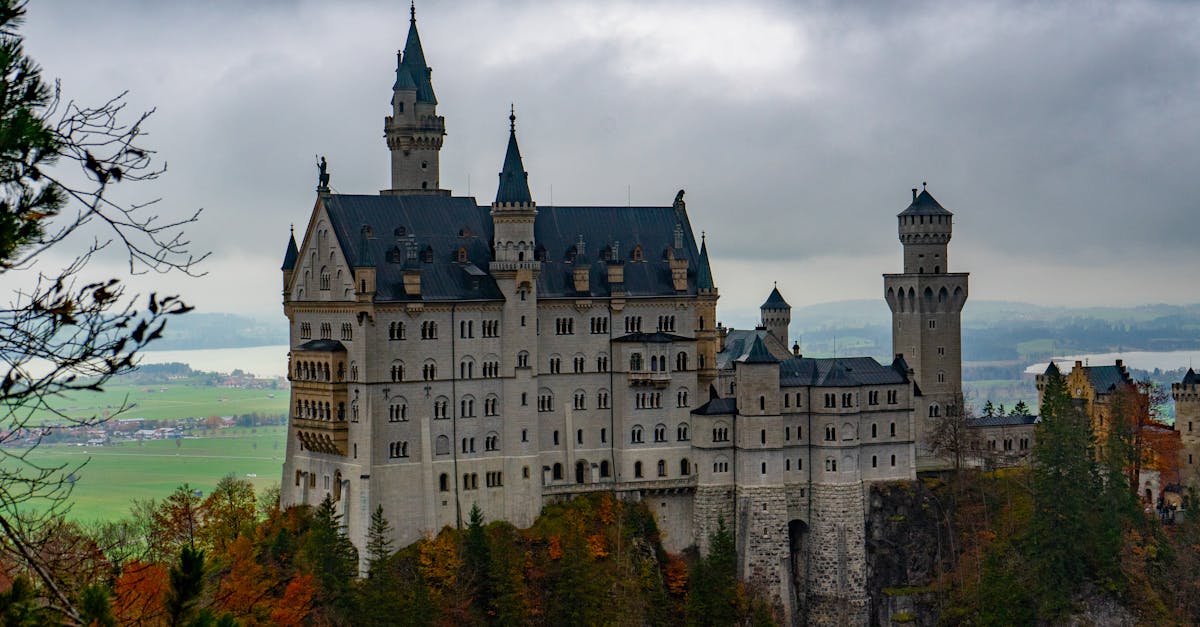 This photo was taken by Oliver Schröder on Pexels.
Welcome to the heart of Bavaria, where reality bends to meet a dream. Neuschwanstein Castle stands not merely as a stone structure on a limestone cliff, but as the world's most famous fairy tale brought to life. As your guide through Germany's magical landscapes, I invite you to step beyond the postcard-perfect view and into the story of King Ludwig II. In this journey, we will explore the king's romantic vision that defied the industrial age, wander through the Swan Knight halls filled with architectural wonder, and uncover the real history and enduring legends hidden behind the castle's pristine white towers. Get ready to discover the magic behind the myth.
The Dream of a King: Ludwig II's Vision
Step inside the gilded halls of Neuschwanstein, where King Ludwig II's boundless imagination transformed stone and mortar into a sanctuary of romantic fantasy. Far from the political realities of 19th-century Bavaria, Ludwig retreated to this mountain peak to create a personal opera set in real life, meticulously designing interiors inspired by Wagnerian operas like Tannhäuser and Lohengrin. As you wander through the Throne Room with its shimmering mosaic floor or gaze out from the Sleeping Chamber onto the misty Alps, you are walking through the mind of a monarch who sought to escape his duties and live within a world of pure artistic idealism.
Though often criticized by his contemporaries as an eccentric dreamer whose lavish spending nearly bankrupted the state, Ludwig's vision has ultimately secured his place in history as the "Fairy Tale King." The castle was never intended for public display but served as a private refuge where he could construct a legend that would outlast his tragic death in 1886. Today, the structure stands not merely as a monument to royal excess, but as a testament to the power of dreams, inviting visitors to believe that once upon a time, a king truly believed he could build a paradise on earth, turning a simple hilltop into the most famous castle in the world.
 This photo was taken by Erik Mclean on Pexels.
Architectural Magic: Inside the Swan Knight Halls
Stepping into the Swan Knight Halls of Neuschwanstein Castle is akin to walking directly into a Wagnerian opera, where every surface tells a story of Germanic legend and romantic idealism. The walls are adorned with breathtaking frescoes depicting scenes from the "Lohengrin" saga, featuring the mysterious knight who arrives on a swan-boat to defend the innocent Elsa. These intricate paintings, painted by Christian Jank, do not merely decorate the room but immerse visitors in a world of chivalry and divine intervention, capturing Ludwig II's deep fascination with the mythical past. The sheer scale of the artwork, combined with the opulent gold leaf detailing and the soaring arched ceilings, creates an atmosphere that feels less like a historical residence and more like a stage set brought to life by the king's boundless imagination.
The architectural brilliance of this hall extends beyond its visual splendor to its innovative engineering for the 19th century, designed to evoke a sense of ethereal lightness despite its grandeur. Ludwig II intended this space as a tribute to Richard Wagner's music dramas, resulting in a harmonious blend of art, architecture, and technology that was decades ahead of its time. The ceiling features a stunning depiction of the heavenly court, while the floor's mosaic work complements the narrative of the frescoes below, creating a cohesive artistic vision that envelops the visitor. As you stand beneath the vaulted roof, one can almost hear the echo of the swan's cry and feel the weight of the legends that inspired Bavaria's most famous monarch to build his dream palace amidst the rugged Alps.
 This photo was taken by Abdullah Öğük on Pexels.
Beyond the Postcard: The Real History and Legends
 This photo was taken by 52541231 dsadasdas on Pexels.