The History Behind the Brandenburg Gate and Checkpoint Charlie
 This photo was taken by Miguel Cuenca on Pexels.
Welcome to Berlin, the vibrant heart of Germany where every cobblestone tells a story of resilience and transformation. As we embark on this journey through history, we will stand before two of the city's most iconic landmarks: the majestic Brandenburg Gate and the historic Checkpoint Charlie. These structures are not merely architectural marvels; they are powerful symbols that have witnessed the rise of empires, the tragic division of a nation during the Cold War, and ultimately, the triumphant moment of reunification. From royal triumphs in the 18th century to the tense standoff at the Iron Curtain, these sites offer a profound glimpse into the complex narrative that shaped modern Europe. Join me as we explore how these monuments evolved from markers of power into enduring emblems of freedom and unity.
From Royal Triumph to Symbol of Division
From Royal Triumph to Symbol of Division
Originally commissioned by King Frederick William II in the late 18th century, the Brandenburg Gate was envisioned as a monument to peace and Prussian triumph, standing proudly as the grand entrance to Berlin's most famous boulevard. Its neoclassical design, crowned by the Quadriga—a chariot drawn by four horses driven by the goddess Victoria—symbolized the city's aspirations for unity and prosperity during an era of Enlightenment. For decades, it served as a majestic backdrop for royal processions and military parades, embodying the power and cultural sophistication of the German capital before the tumultuous events of the 20th century would drastically alter its meaning.
However, the gate's destiny took a somber turn following World War II when Berlin was divided into sectors, transforming this once-unifying symbol into the most potent icon of the Cold War's Iron Curtain. As the Berlin Wall was erected in 1961, the structure found itself isolated within the no-man's-land between East and West, with the wall's path cutting directly through the area beneath the arches, effectively sealing off access from both sides. For over three decades, the Brandenburg Gate stood silent and forbidding, a stark reminder of human separation, until the fall of the Wall in 1989 turned it back into a beacon of freedom and reunification, echoing the very spirit of victory it was originally built to celebrate.
 This photo was taken by Peter Xie on Pexels.
The Cold War Crossroads at Checkpoint Charlie
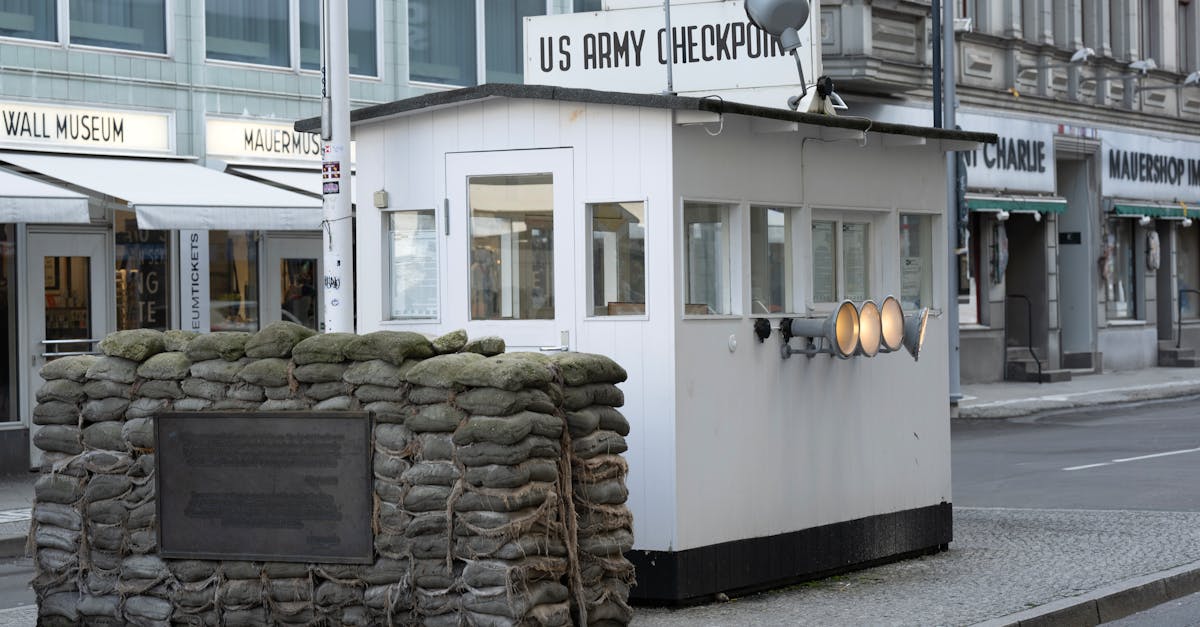
Once the most famous crossing point between East and West Berlin, Checkpoint Charlie stands as a stark symbol of the Cold War's division, where spies, defectors, and ordinary citizens faced life-or-death decisions under the watchful eyes of Allied forces. Originally established in 1961 to control access for foreigners and diplomats, this iconic border post became the epicenter of international tension, famously hosting the 1961 standoff between American M48 Patton tanks and Soviet T-55s just meters apart. Today, the reconstructed wooden guardhouse and the large-scale mural depicting scenes from the era serve as a poignant reminder of the Iron Curtain that once split families and cities, offering visitors a tangible connection to the high-stakes drama that defined Berlin's existence for nearly three decades.
Walking through the site allows you to trace the footsteps of those who risked everything to cross into freedom, with interactive displays and historical plaques detailing daring escapes via hot air balloons, tunnels, and hidden compartments in cars. While the original wall has largely vanished, the preserved checkpoint remains a powerful educational hub where guided tours bring the narratives of escape attempts and political maneuvering to life, contrasting sharply with the vibrant, unified city that surrounds it. It is here that the abstract concept of ideological conflict becomes deeply personal, inviting travelers to reflect on the fragility of peace and the enduring human spirit that ultimately triumphed over division.
 This photo was taken by Kamal Hyder on Pexels.
Reunification and the Gate's Modern Legacy
The fall of the Berlin Wall in 1989 marked a triumphant turning point for the Brandenburg Gate, transforming it from a scarred symbol of division into the ultimate emblem of German reunification. For nearly three decades, the monument stood silently on the "death strip," its iconic Quadriga facing away from the city while the surrounding area became a no-man's-land separating East and West; however, as the border opened, thousands of jubilant citizens poured through the gate, celebrating the end of an era that had fractured families and nations. This historic moment was not merely about removing a physical barrier but about healing a collective trauma, with the gate serving as the focal point where former adversaries embraced as one people, paving the way for the official unification of Germany in 1990.
In the modern era, the legacy of this site has evolved into a vibrant space of peace and unity, hosting everything from massive New Year's Eve celebrations to solemn remembrances of those who lost their lives during the Cold War. While Checkpoint Charlie remains a popular tourist attraction offering a glimpse into the tense days of espionage and border control, the Brandenburg Gate itself has transcended its dark past to become a dynamic stage for cultural expression and political discourse. Today, visitors walking beneath its sandstone columns are reminded that freedom is fragile and must be cherished, as the structure stands not just as a relic of history, but as an enduring testament to the resilience of the human spirit and the power of reconciliation.
 This photo was taken by K on Pexels.